
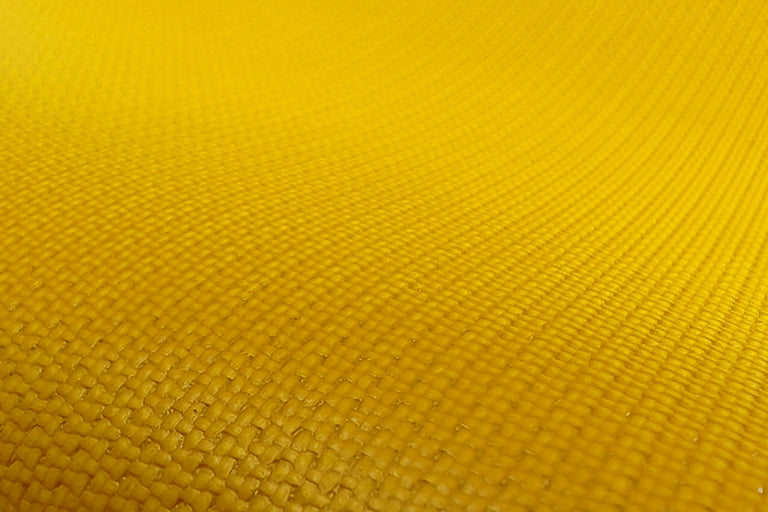
In the modern industrial and manufacturing landscape, the choice of protective coating is crucial for ensuring the efficiency, safety, and longevity of equipment.
When the substrate is fiberglass—already known for its structural strength and lightness—the application of an advanced treatment is what elevates its performance in environments classified as “difficult” or “hostile,” where friction, humidity, and the risk of electrostatic discharge (ESD) are constant.
Polyurethane is already known for its versatility and excellent mechanical properties, making it the ideal coating to protect and enhance substrates like fiberglass.
But when these basic characteristics are boosted with advanced technical specifications, such as antistaticity, flame retardancy (FR), and water repellency, a treatment is obtained that redefines performance standards.
This is where La Plastik Tex intervenes with its advanced formulation.
Our focus is on antistatic polyurethane, a specialized coating essential for numerous sectors.
This treatment combines the extraordinary protective properties of polyurethane with the critical ability to dissipate static electricity, all applied to a robust fiberglass body.
Let’s look in detail at how the unique technical properties of La Plastik Tex’s antistatic polyurethane FR treatment translate into a competitive advantage and operational safety for your company.
Eliminate The Risk: Our Antistatic Polyurethane
Static electricity is a silent and often underestimated danger. In industrial environments, the accumulation of electrostatic charges can lead to critical risks: the ignition of explosions (petrochemical, chemical, ATEX sectors) or damage to sensitive electronic components (hi-tech sectors).
La Plastik Tex’s antistatic polyurethane FR treatment is specifically formulated to eliminate this risk at the root.
Applied to fiberglass, this coating ensures that surface and volume resistance fall within the parameters required by international regulations.
Thanks to the addition of conductive or dissipative additives, the antistatic polyurethane FR ensures that any charge generated by friction or movement is immediately and safely dispersed to the ground.
This is not just a protective coating; it is an active safety component.
We coat fiberglass supports and components with our antistatic polyurethane to ensure that the entire composite piece operates with maximum safety in sensitive environments.
The abbreviation of polyurethane (PU) with an antistatic specification certifies its protective effectiveness.
Unmatched Durability: Resisting Abrasion And Stress
Fiberglass offers excellent structural strength, but its surface needs protection to resist mechanical wear.
La Plastik Tex uses antistatic polyurethane to give the component unmatched durability.
Polyurethane is intrinsically superior to other coatings in terms of resistance to wear, abrasion, and fire.
High Abrasion Resistance
The polyurethane coating maintains its structural and protective integrity even after prolonged work cycles and constant contact with rough surfaces or aggressive materials.
This guarantees a significantly longer service life for the fiberglass component.
Mechanical Protection
Polyurethane acts as a highly resistant “cushion,” protecting the delicate fiberglass matrix from bumps, impacts, and dynamic stress.
Totally Flame Retardant
Our polyurethane treatment is formulated with special additives that make it flame retardant.
This property ensures that the coating significantly delays the propagation of the flame and, under most conditions, is self-extinguishing once the heat source is removed.
Protection From Moisture: Water Repellency For Hostile Environments
Many industrial environments are characterized by the constant presence of humidity, condensation, or direct contact with liquids, including oils and chemical solvents.
Although fiberglass is resistant in itself, the water-repellent polyurethane treatment guarantees a superior and crucial level of surface protection.
La Plastik Tex’s water-repellent polyurethane offers an exceptional waterproof barrier, which protects the fiberglass substrate and the coating’s antistatic circuit.
This feature is vital for several reasons:
- Stability of Antistatic Properties: water repellency is fundamental to ensuring the long-term stability of the coating. Although environmental humidity can favor electrostatic dissipation, it can also lead to excessive and uncontrolled antistaticity or, worse, degradation of the component. Our water-repellent polyurethane treatment instead ensures that the antistatic properties remain stable and compliant with the required parameters, while protecting the fiberglass fabric from infiltrations that would compromise its mechanical resistance;
- Total Protection: the polyurethane material coating completely seals the component, preventing water, weak acids, and chemical agents from penetrating or degrading the underlying fiberglass;
- Hygiene and Cleaning: the smooth and water-repellent surface facilitates cleaning and sanitization, preventing the penetration of contaminants, which is essential in sectors such as food processing.
For applications requiring rapid identification, we also provide formulations such as the multicolored polyurethane, which combine antistatic safety and visual functionality.
La Plastik Tex Antistatic Polyurethane: Engineered For Your Challenges
La Plastik Tex positions itself as a strategic partner not only as a supplier but as a technical consultant specialized in polyurethane treatments on fiberglass.
We don’t just provide a generic “what is polyurethane,” but a customized coating solution.
We are able to personalize the coating hardness, color, and antistatic specification to adapt perfectly to your needs.
Whether you are looking for a protective coating for a fiberglass component, or polyurethane for thermal insulation, our antistatic polyurethane FR is the engineered answer to the complexity of your work environments.
The combination of antistaticity, abrasion resistance, fire resistance, and water repellency in a single polyurethane treatment makes our product the definitive choice for those seeking safety, performance, and longevity for their fiberglass components.
FAQs On Antistatic Polyurethane
Is antistatic polyurethane the same as conductive polyurethane?
No, antistatic polyurethane has the ability to dissipate static electricity in a controlled and slow manner to prevent sparks (ideal for explosion prevention). Conductive polyurethane, on the other hand, conducts electricity very quickly. For most industrial applications, it is the antistatic property that is required.
What is the advantage of applying antistatic polyurethane to fiberglass?
Fiberglass provides the structural integrity, while antistatic polyurethane provides the surface protection. The coating offers abrasion resistance, water repellency, and, above all, the elimination of ESD risks that the basic composite material (fiberglass) alone could not guarantee.
What is the difference between the polyurethane abbreviation PU and other coatings?
The abbreviation for polyurethane is PU. Unlike paints or other coatings, the polyurethane treatment from La Plastik Tex offers notably superior abrasion and impact resistance, greater resistance to oils and solvents, and is the only coating we can formulate precisely to obtain the combined characteristics of antistaticity and water repellency.
Is water-repellent polyurethane also suitable for thermal insulation?
Yes, polyurethane for thermal insulation is one of its most common applications. Its cellular structure, combined with its natural water repellency, makes it an excellent thermal insulator and a barrier against humidity and condensation, protecting the fiberglass.
Does antistatic polyurethane coating affect the strength of fiberglass?
No, quite the opposite. The antistatic polyurethane coating protects the fiberglass from surface wear, abrasion, and exposure to chemical agents and humidity, helping to keep the structural strength of the component intact for a longer period of time.