
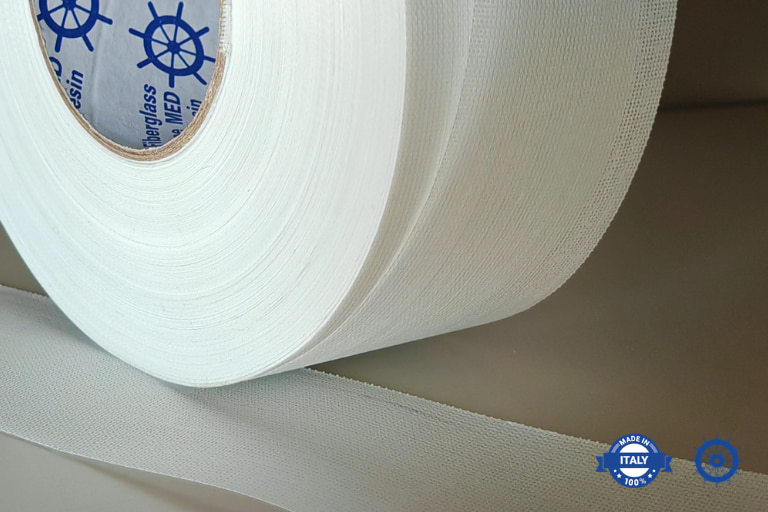
Sealing joints in marine insulation is a critical factor for fire safety and the thermal efficiency of vessels.
This article analyses in detail the technical characteristics of glass fabric tape for the marine sector, examining MED approval requirements, resistance to high temperatures and the importance of low flame spread in maritime environments.
Glass Fabric Tape For The Marine Industry: Fire Protection Solutions For Insulation Panels And Bulkheads
In the fields of architecture and shipbuilding, passive fire safety is a fundamental pillar of design, governed by international standards and extremely stringent regulations.
When installing thermal and acoustic insulation systems in the most critical areas of a vessel, ensuring the continuity of the protective barrier along the joints between the insulation panels becomes an absolute priority.
In this context, the use of a suitable and certified marine-grade glass fabric tape not only ensures the mechanical integrity of the insulation but also prevents the formation of thermal bridges and the potential spread of fire through the cavities.
The choice of materials for use on board cannot be left to generic solutions designed for civil construction or traditional land-based industry.
The marine environment subjects structures to continuous stresses, including constant vibrations, the presence of salt-laden moisture and significant temperature fluctuations in the vicinity of engine rooms and exhaust ducts.
A marine-grade glass fabric tape must therefore guarantee perfect and long-lasting adhesion, whilst maintaining its non-combustible properties even under extremely harsh operating conditions.
Regulatory Requirements And The Importance of M.E.D. Certification
Compliance with international maritime safety directives requires that every component installed on board must pass rigorous laboratory tests before it can be used on shipyards.
The use of MED-certified marine tape certifies that the product meets the specifications set out in the Marine Equipment Directive and the standards established by the International Maritime Organisation (IMO).
The presence of the Wheelmark on MED-certified marine tape is the fundamental prerequisite required by classification societies to authorise the vessel’s entry into service.
In addition to the legal aspects, the certification guarantees that the material has undergone flammability tests to verify that, in the event of direct ignition, it does not contribute to the spread of fire.
During the design phase of a cruise ship or merchant vessel, every component used to seal ventilation ducts and insulation barriers must be accompanied by the relevant documentation, confirming the importance of relying on an approved MED-certified marine tape.
Find out our glass fabric tape
Fire Safety And Behaviour At High Temperatures
Fire prevention in engine rooms and watertight compartments requires the use of materials capable of withstanding high temperatures without vitrifying or releasing toxic substances.
To prevent a fire from developing into a catastrophic event, it is essential to apply a marine-grade fire-resistant glass fabric tape that maintains a stable protective barrier even under the most extreme thermal stress.
The use of marine-grade glass fabric tape at the joints between mineral wool or fibreglass panels prevents heat from penetrating the gaps, thereby preserving the structural integrity of the entire insulation system.
In the event of direct contact with flames, the fire behaviour of the cladding materials determines the time available to the crew to activate the on-board fire-extinguishing systems.
The use of a fire-retardant marine glass fabric tape ensures superior thermal resistance, which is crucial for the protection of ventilation ducts and service ducts.
Each insulated and protected section helps to create safe compartments, limiting the transmission of radiant heat to adjacent areas.
Choosing a marine glass fabric tape e with high thermal performance therefore represents a strategic investment in the passive safety of the entire vessel.
Mechanical Properties And Protection Against Combustion Gases
In addition to flame resistance, the performance of marine glass fabric tape depends on their chemical and structural composition.
A self-extinguishing glass fabric tape is designed to stop burning as soon as the direct source of heat is removed or isolated.
This characteristic prevents the tape from acting as a fuse along the insulation joints, a crucial factor in maintaining safety in the ship’s hard-to-reach cavities.
The application of a self-extinguishing glass fabric tape ensures that the seal remains intact without causing molten material to drip.
The quality of the adhesive used on the surfaces of the glass fabric tape plays a decisive role in preventing the formation of cracks through which opaque fumes and harmful gases could escape.
The use of this adhesive prevents delamination of the surface coating caused by thermal ageing or exposure to marine atmospheric agents.
Ensuring the watertight integrity of joints using a self-extinguishing glass fabric tape means protecting not only the ship’s structure but also the quality of the air breathed within the escape routes in the event of an emergency.
The efficiency of a marine insulation system is closely linked to its ability to keep the insulating surface intact even in the presence of strong hull vibrations.
The use of a MED-approved glass fabric tape ensures consistent adhesion to various types of substrate, including aluminium foil, metal surfaces and fibreglass fabrics.
Each glass fabric tape is tested to withstand the expansion of structures subject to temperature fluctuations.
Installation requires clean surfaces and even pressure during application, thus ensuring aesthetic and functional continuity along the entire length of the duct.
Using a glass fabric tape specifically developed for structural joints reduces installation time and ensures compliance with shipyard specifications.
Its versatility makes it the standard solution for sealing HVAC ducts and insulating fire bulkheads.
Containment Of The Spread Of Flames And Toxic Fumes
Another key parameter in the assessment of marine materials concerns the surface flame spread rate along interior linings.
The choice of a marine tape with low flame spread prevents the fire from spreading rapidly along air duct runs or technical ceilings.
Incorporating this tape into acoustic and thermal insulation systems reduces the risk of fire spreading between the vessel’s various decks before the automatic fire-fighting systems are activated.
The use of a low-flame-propagation marine tape ensures that the high standards required in passenger areas and crew quarters are maintained.
Maritime regulations designed to ensure passenger safety require that all low-flame-propagation marine tape be free from halogens and volatile organic compounds that could degrade dangerously at high temperatures.
In this way, the use of such tape contributes directly to the safeguarding of human life at sea.
The correct application of marine glass fabric tape to the joined sections of systems creates a barrier against the passage of vapour and moisture, preventing the formation of condensation beneath the insulation layer.
Corrosion under insulation (CUI) is one of the most insidious threats to a ship’s metal structures, and the use of high-quality marine glass fabric tape eliminates infiltration that could trigger premature corrosion.
In conclusion, choosing the right marine glass fabric tape is not merely a finishing touch, but an essential component in ensuring the longevity of the systems and the overall safety of the vessels.
The use of certified, high-performance materials ensures compliance with strict classification society standards and maximum protection against the risk of fire at sea.
Find out our glass fabric tape
FAQs
What Is Glass Fabric Tape For The Marine Industry, And What Is It Used For?
Marine glass fabric tape is a flexible technical component designed to seal the joints between thermal and acoustic insulation panels on board vessels. It serves to ensure the continuity of the fire barrier, prevent thermal bridges and block the ingress of moisture or vapour.
Why Is M.E.D. Certification Essential For A Marine Belt?
The presence of MED-certified marine tape confirms that the product meets the requirements of the European Marine Equipment Directive and IMO standards. This certification is mandatory to ensure that the material is non-flammable and safe in the event of a fire in international waters.
What Is The Difference Between Fire-Retardant Tape And Self-Extinguishing Glass Fabric Tape?
A marine-grade fire-resistant glass fabric tape is designed to withstand direct exposure to high temperatures without degrading, whilst a self-extinguishing glass fabric tape has the chemical property of stopping its own combustion once the direct source of the flame is removed, thereby preventing the spread of fire.
What Are The Advantages Of A Low-Flame Propagation Marine Tape?
The use of low-flame-propagation marine tape prevents the fire from spreading rapidly along ventilation ducts and through cavities, buying valuable time for evacuation and for the crew to extinguish the fire.
How Can You Ensure That An Approved Marine Glass Fabric Tape Remains Secure On HVAC Ducts?
To ensure that a certified marine glass fabric tape performs to its full potential, the surfaces must be free from dust, grease or condensation. The tape must be applied by exerting even pressure to activate the adhesive and ensure a long-lasting, airtight seal.