
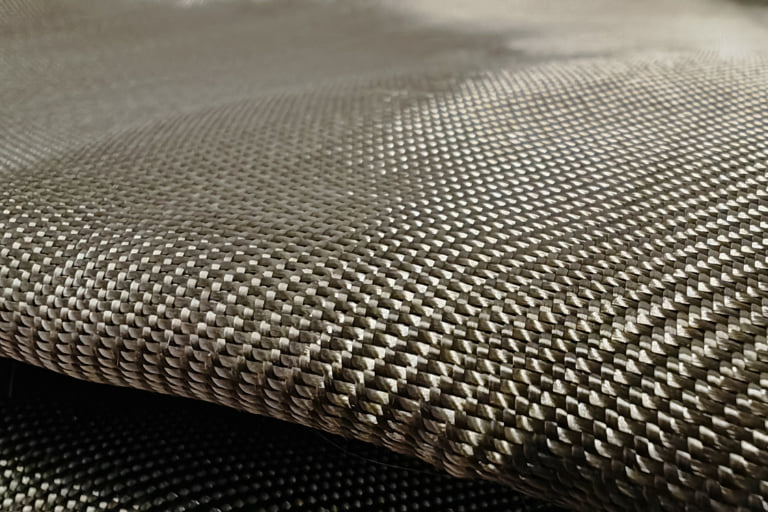
In the field of materials science, the search for solutions that strike a perfect balance between extreme strength and environmental stability has brought basalt fabric to the fore.
This material, which originates from the solidification of volcanic magma, now represents a major technological frontier, capable of offering performance that surpasses that of traditional synthetic fibres in several respects.
The very nature of its geological origin endows the finished product with a range of unique attributes, making it the component of choice in contexts where safety and durability are non-negotiable requirements.
Origin And Geology: What Is Basalt?
To understand the properties of a basalt fabric, it is essential to analyse the raw material from which it is made.
Basalt is a dark-coloured effusive igneous rock, formed by the rapid cooling of lava on the Earth’s surface or on the ocean floor.
It is one of the most common rocks in the world, characterised by a dense and compact structure.
The transformation of this solid rock into a textile fibre is a purely thermal process: the material is melted at approximately 1450°C and subsequently drawn through platinum-iridium dies to form continuous filaments.
This method of producing basalt fibre does not involve the addition of chemical additives or binding agents during the melting phase, which guarantees absolute mineral purity.
Consequently, basalt fibre retains the same resistance to chemicals and high temperatures that characterise the original volcanic rock, but with the flexibility required to be transformed into a high-density technical fabric.
Thermomechanical Properties Of Basalt Fabric
Industrial interest in basalt fabric is driven primarily by its remarkable thermal stability.
Whilst many polymeric fibres begin to degrade even at moderate temperatures, this fabric maintains its structural integrity within an operating range spanning from -260°C to 700°C under continuous exposure.
This characteristic makes it a first-rate natural insulator, capable of acting as a shield against radiant heat and withstanding violent thermal shocks without undergoing vitrification or molecular fractures.
In addition to its thermal properties, basalt fabric offers mechanical tensile strength that is significantly higher than that of E-glass fibre.
The high elastic modulus allows the material to withstand significant structural loads with minimal deformation.
Furthermore, its inherent resistance to acid and alkali corrosion enables basalt fabric to remain unaffected even in environments saturated with moisture or in the presence of aggressive chemicals, where other reinforcing materials would undergo rapid degradation.
Operational Contexts And Sector Dynamics
The global market sees basalt fabric being used across a wide range of critical sectors.
In the infrastructure sector, the material is incorporated as reinforcement for structures subject to dynamic loads or in earthquake-prone areas, taking advantage of its resistance to corrosion over time.
In the transport industry, both land and maritime, the electromagnetic transparency of basalt fabric makes it the preferred choice in contexts where the presence of sensors and radar systems requires materials that do not interfere with communication signals.
The production of basalt fibre composite fabric is also growing in the energy sector, particularly for the manufacture of components that must operate in hostile atmospheric conditions.
The UV resistance and chemical stability of basalt fibre ensure that products retain their aesthetic and functional properties for decades, reducing the need for protective surface treatments or costly maintenance.
Sustainability And The Life Cycle Of Basalt
Basalt is an abundant and eco-sustainable natural resource; its manufacturing process requires less energy than that of carbon fibre and does not generate toxic by-products.
As basalt fabric is made from pure rock, it is completely non-flammable.
In the event of a fire, it emits neither toxic gases nor opaque smoke, a passive safety feature of inestimable value.
Furthermore, unlike synthetic materials derived from petroleum, basalt fibre is inherently recyclable.
At the end of a product’s life cycle, basalt fabric can be remelted or reduced to granules for reuse in other cementitious or bituminous applications, closing the loop of a circular economy based on geological materials.
This characteristic positions basalt fibre composite fabric as one of the most forward-thinking solutions for the engineering of the future, where performance must necessarily coexist with environmental responsibility.
Conclusions On The Efficiency Of The Basalt Fibre System
Ultimately, basalt fabric represents a natural evolution in textile engineering.
The combination of a time-honoured raw material such as basalt with modern spinning technologies has resulted in a product capable of meeting the most demanding challenges in thermodynamics and mechanics.
Whether it is a matter of managing cryogenic temperatures or reinforcing structures exposed to corrosive agents, basalt fibre demonstrates a resilience that few other materials can match.
The continued adoption of basalt fabric in high-tech sectors confirms that the path to innovation often lies in the rediscovery and refinement of nature’s most robust elements.
FAQs On Basalt Fabric
What is basalt?
Basalt is an effusive igneous rock formed by the cooling of volcanic lava. It is composed mainly of minerals such as plagioclase, pyroxenes, and olivine. Due to its hardness and strength, it is processed into fiber to create high-performance technical fabrics.
What is the typical heat resistance of basalt fabric?
Basalt fabric has an extremely wide operating range, maintaining its mechanical properties from -260°C up to approximately 700°C. The melting point of basalt fiber is very high, reaching around 1450°C.
Can basalt fabric be used at sea?
Yes, one of the distinctive characteristics of basalt fiber composite fabric is its chemical inertness. It is highly resistant to salt corrosion, making it ideal for structural components in the nautical sector or for offshore infrastructure.
Are there any differences in weight between basalt fibre and carbon fibre?
Basalt fibre has a slightly higher density than carbon fibre, but offers a very favorable cost-performance ratio, particularly in applications where fire resistance and thermal insulation take precedence over extreme lightness alone.
Why is basalt fabric considered environmentally friendly?
Basalt fabric is eco-friendly because it is derived from an abundant natural rock. No harmful chemical additives are used in its production, and the material is fully recyclable at the end of its life cycle.