
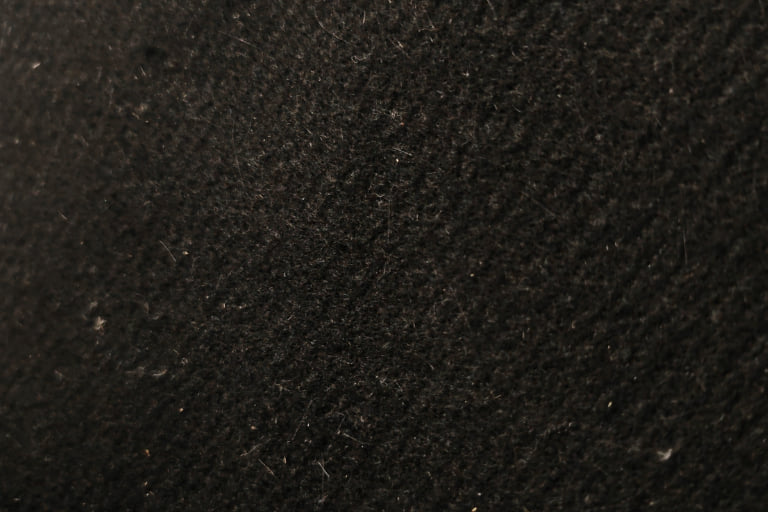
The technological evolution of advanced materials has allowed us to reach milestones that were unimaginable only a few decades ago, especially regarding the management of thermal flows in critical environmental conditions.
In this scenario, carbon fiber felt stands as the absolute benchmark for those who need to combine superior thermal protection with a lightweight and resistant structure.
This material does not merely represent an innovation in the field of insulation; it is the result of complex physical and chemical processes that allow the molecular characteristics of carbon fiber to be exploited for massive insulation purposes.
The use of carbon fiber felt has become a fundamental pillar for heavy industry and high technology today. Its ability to maintain its mechanical qualities unchanged at temperatures exceeding 2000°C, in oxygen-free environments or under vacuum, makes it an irreplaceable ally. To understand the value of this material, it is necessary to analyze how the structure of carbon fibers is manipulated to create a non-woven fabric capable of defying the traditional laws of thermodynamics, offering at the same time unique electrical properties.
What Is Carbon Fiber Felt And How Is It Produced?
The genesis of carbon fiber felt lies in a complex production chain that transforms organic precursors, such as polyacrylonitrile (PAN) or rayon, into a matrix of almost pure carbon.
Through carbonization cycles at extremely high temperatures, non-carbonaceous molecules are removed, leaving a network of ordered carbon atoms that give felt carbon fiber its typical resistance and inertia.
Subsequently, the fibers are mechanically intertwined through a needle-punching process, which creates a porous but compact mat capable of trapping air (or vacuum) and blocking heat transmission.
There are different commercial variants, which differ in density and stiffness.
Soft felt offers a flexibility that allows it to coat irregular geometries with extreme simplicity, while rigid felt is stabilized with resins and further treated to create self-supporting panels.
In every configuration, the integrity of the carbon fibers ensures that the product does not undergo significant performance drops over time, guaranteeing constant and reliable thermal protection even after numerous heating and rapid cooling cycles.
Analysis Of Electrical And Thermal Conductivity In Carbon Fibers
One of the most fascinating and technically relevant aspects of carbon fiber felt concerns its dual nature regarding conductivity.
Unlike common insulating materials, which are typically dielectric, carbon fiber possesses an atomic structure similar to graphite, which allows the movement of electrons through the basal planes of the fiber.
This characteristic gives felt carbon fiber an intrinsic electrical conductivity that can be modulated based on the treatment temperature undergone during production, making it an active material in many electrochemical applications.
At the same time, the thermal conductivity of carbon fiber felt follows peculiar logics: although a single carbon fiber can be an excellent conductor of heat along its axis, the random arrangement and porosity of the felt create a tortuous path that drastically reduces macroscopic thermal transfer.
This phenomenon transforms carbon fibers from potential conductors into excellent insulators, as the air or vacuum trapped between the filaments prevents direct convection and conduction. Understanding this physical balance is fundamental for designing systems that require both thermal insulation and controlled electrostatic discharge or electrical conduction capabilities.
Furthermore, the overall electrical conductivity of felt carbon fibers grows proportionally with the increase in temperature, a behavior that clearly differentiates it from metals.
This property makes the material ideal for use in electrodes for flow batteries or in resistive heating systems, where the stability of the carbon fibers guarantees a long operational life without degradation of the electrical contacts.
Exploiting the conductivity of carbon fiber within a felt matrix therefore allows for multifunctional performance that no other traditional insulating material would be able to offer.
Why Choose Felt Carbon Fibers For Energy Efficiency
Investing in carbon fiber felt means embracing a production philosophy oriented toward energy saving and the systematic reduction of thermal waste.
A system insulated with this material requires significantly less energy to reach and maintain operating temperatures, with a direct impact on the sustainability of industrial processes.
The ability of felt carbon fibers to reflect heat makes it superior to many ceramic insulators, especially when installation spaces are limited and every centimeter of thickness must guarantee the maximum possible protection.
Operational safety is another determining factor pushing toward the adoption of carbon fiber felt.
Thanks to the nature of carbon fiber, the material does not suffer from thermal shock and maintains its shape without flaking or releasing dangerous volatile dusts during normal use.
The structural stability guaranteed by the carbon fibers prevents sudden failures of the insulation, protecting not only the integrity of the finished product but also the health of operators and the longevity of the technological equipment involved in the production cycle.
Sustainability And Recycling Of Carbon Fibers In The Insulation Sector
In an era where the circular economy has become a global priority, carbon fiber felt offers interesting prospects also on the front of end-of-life and material recovery.
Advanced processes now exist that allow carbon fiber to be recovered from industrial waste or discarded artifacts to be reinserted into the production cycle in the form of new needle-punched felt.
This approach reduces the environmental impact associated with the production of virgin raw materials and contributes to making felt carbon fiber an ethical and far-sighted choice for companies attentive to ESG (Environmental, Social, and Governance) policies.
Looking to the future, the development of new surface treatments promises to make felt carbon fibers even more resistant to oxidation in open environments, further expanding its range of action toward civil sectors and transport.
Continuous research on carbon fibers will lead to the creation of increasingly thin and high-performing insulators, consolidating the role of felt as a cornerstone for Industry 4.0.
Choosing carbon fiber felt today therefore means focusing on a technology that evolves together with the needs of an increasingly demanding global market oriented toward excellence.
Conclusion: The Strategic Value Of Material Choice
In summary, carbon fiber felt represents much more than a simple protective layer: it is an investment in quality, safety, and operational efficiency.
Whether it is managing electrical conductivity in an electrochemical cell or guaranteeing the thermal insulation of a high-temperature furnace, this material constantly proves to be up to the most difficult technological challenges.
The synergy between the properties of carbon fiber and the versatility of non-woven fabric ensures that felt carbon fibers will remain an indispensable component for the technological development of the coming decades.
FAQs On Carbon Fiber Felt
What is the difference between carbon fiber felt and graphite felt?
Graphite felt is a carbon fiber felt that has undergone further thermal treatment above 2400°C. This process increases the purity of the carbon and improves electrical conductivity, making the carbon fibers even more stable against chemical agents and thermal stress.
Can carbon fibre felt be used in the presence of air?
At high temperatures (above 350-400°C), carbon fibers begin to oxidize when in contact with oxygen. For this reason, carbon fiber felt is mainly used in inert atmospheres (such as Argon or Nitrogen) or under vacuum. Protective coatings are required for use in air at high temperatures.
How is carbon fibre felt fixed inside furnaces?
Carbon fiber felt can be fixed using graphite or carbon-carbon (C/C) screws and nuts, or using special heat-resistant adhesives. The choice depends on whether soft felt or rigid carbon fiber panels are being installed within the thermal chamber.
What are the main advantages of carbon fibre over rock wool?
Unlike rock wool, carbon fiber felt does not melt or lose its structural stability at extreme temperatures. Furthermore, carbon fiber does not release binding agents or “shots” that could contaminate the working environment or the treated parts in conditions of intense heat.