
In the world of insulation, we are always looking for solutions that offer superior performance with the smallest possible footprint.
In recent years, one material in particular has captured the attention of engineers and innovators: aerogel insulation.
Often called “solid smoke” for its incredible lightness and ethereal appearance, aerogel insulation is not just a marvel of materials science, but a true revolution for energy efficiency in various sectors, from construction to industry.
But what exactly is aerogel insulation and what are its characteristics that make it so special?
Introduction to Aerogel Insulation: The Material of the Future
Aerogel insulation is a porous synthetic material derived from a gel in which the liquid component has been replaced by a gas.
The result is an extremely lightweight solid structure, with a density that can be less than 3 kg/m3, making it up to 500 times less dense than glass.
This incredible lightness is due to its unique composition: aerogel insulation is 99.8% air, which is a decisive factor in its excellent insulating capabilities.
Despite its apparent fragility, aerogel insulation possesses surprising resistance to compression, derived from its rigid and interconnected structure.
Its internal structure is highly porous, with nanometric-sized pores that create a vast internal surface area.
This porosity significantly reduces thermal conduction, as air particles trapped in the pores impede heat transfer.
Another fascinating property of some types of aerogel insulation is its high optical transparency.
This makes it a unique material for applications requiring light transmission in combination with exceptional thermal insulation, opening up unimaginable scenarios for building design and efficiency.
The Extreme Versatility of Aerogel Insulation
Aerogel insulation is not a monolithic material but can be produced and used in different forms, each suitable for specific applications and sectors.
This versatility makes it a valuable component for innovative and high-performing insulation solutions.
Aerogel in Jelly Form
This is the ” original” or purest form, often seen in scientific experiments or niche applications that exploit its extreme lightness and transparency.
It is not typically used for large-scale insulation but is the basis from which other forms are derived.
Aerogel in Microsphere or Powder Form
In this form, aerogel insulation is reduced to small particles or spheres.
Aerogel powder is extremely versatile: it can be added to paints, plasters, mortars, or resins to improve their insulating properties, or used as filler in cavities or gaps for uniform and lightweight insulation.
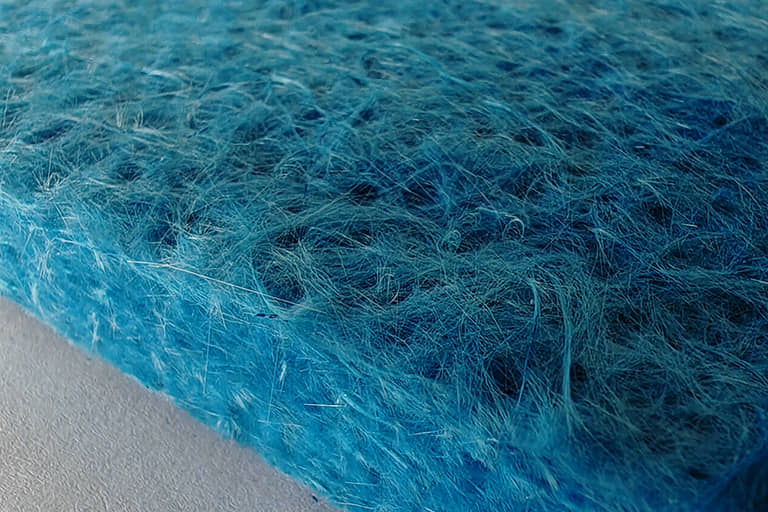
Aerogel Blanket (or Aerogel Insulating Felt)
Among the most used forms in industry and construction is the aerogel insulation blanket, an aerogel insulating felt.
This material is flexible and resistant, available in rolls or sheets.
Thanks to its textile structure, it can be cut and shaped to wrap piping, valves, or irregular surfaces, offering high-performance insulation even in small spaces.
The aerogel insulating felt is particularly appreciated for its ease of installation and the ability to reduce thermal bridges in complex applications.
Aerogel Panel
Aerogel insulation panels are more rigid or semi-rigid versions of aerogel insulation, ideal for application on flat surfaces such as walls, floors, or roofs.
These aerogel insulating panels combine the excellent insulating properties of aerogel with the ease of installation typical of traditional panels.
There are various types of aerogel insulation panels, often combined with supports like plasterboard or magnesite, making them perfect for external and internal aerogel cladding or as aerogel panels for external insulation systems.
Why Aerogel Insulation Is the Future of Insulation
The adoption of aerogel insulation is not just a matter of performance, but a radical change in how we conceive insulation.Its advantages are unequivocal:
- Maximum Efficiency: thanks to its minimal thermal conductivity (up to 0.018 W/mK), aerogel insulation allows very high insulation levels to be achieved with extremely reduced thicknesses. This is crucial in contexts where space is limited, such as in building retrofits or the insulation of complex systems.
- Unmatched Performance: aerogel insulation offers insulating effectiveness superior to traditional materials, drastically reducing heat loss and contributing to significant energy savings.
- Application Versatility: the different forms of aerogel insulation make it suitable for a wide range of uses, from residential and commercial construction (as aerogel cladding or aerogel insulation panels) to the petrochemical, nautical, and aerospace industries.
- Durability and Stability: Aerogel insulation maintains its properties over time, resisting a wide temperature range and difficult environmental conditions, including hydrophobicity and UV resistance.
FAQs On Aerogel Insulation
What is aerogel?
Aerogel is an ultralight and highly porous solid material, derived from a gel in which the liquid part has been replaced by a gas, and is known for being one of the best existing thermal insulators.
What material is aerogel?
Aerogel is a porous synthetic material composed mainly of silicon dioxide (like glass or sand), but with an internal structure that is 99.8% empty (filled with air), which gives it its exceptional insulating properties and very low density.
How is aerogel made?
Aerogel is obtained by removing the liquid component from a gel through a supercritical drying process, which prevents the porous structure from collapsing. The result is a solid with a nanostructure network filled with air.
How are aerogel panels applied?
Aerogel insulation panels are generally applied to flat surfaces through gluing or mechanical fixing. The outer surface of the aerogel panels is often already prepared for the application of mortars or finishes, making the installation similar to that of traditional insulating panels, but with very reduced thicknesses.
What is aerogel used for?
Aerogel insulation is mainly used for thermal insulation in high-performance applications and where space is limited. We find it in construction (as aerogel cladding, aerogel insulation panels, aerogel insulating panels), in industry (insulation of piping, tanks), in the aerospace sector, and in some high-tech applications that require insulation and lightness. Aerogel thermal insulation is no longer a futuristic technology but an accessible reality that offers concrete solutions for current energy and environmental challenges. Its ability to guarantee superior performance in minimal spaces positions it as the key material for future efficiency.