
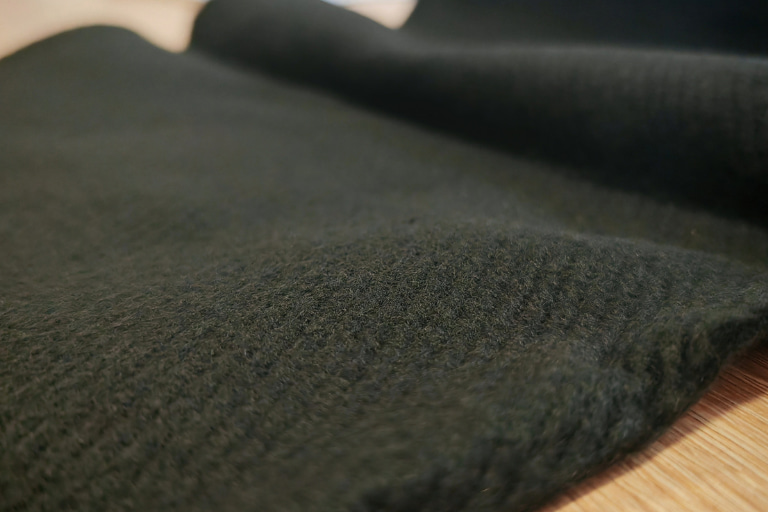
When a plant operates at extreme temperatures, the choice of insulating material determines energy efficiency, operator safety and the longevity of the entire production process.
Among the most advanced solutions available today, fire retardant carbon felt stands out for its ability to withstand conditions in which traditional insulating materials degrade, crumble or release unwanted residues.
In this guide, we explore what it is, how it works, where it is used and what criteria to follow when choosing the most suitable product for your application.
What Is Fire Retardant Carbon Felt?
Fire retardant carbon felt is a non-woven insulating material, produced by the carbonisation of organic precursors such as rayon or polyacrylonitrile, which are then aggregated into a soft, porous and lightweight layer.
The fibrous structure traps air and impedes the transfer of heat, ensuring excellent insulation even at temperatures exceeding 2,000 °C in an inert atmosphere or under vacuum.
The term “fire-resistant”’ indicates that the material does not support combustion and does not propagate flames, an essential requirement in industrial furnaces and in all environments subject to fire risk.
When discussing carbon felt, it is useful to distinguish between two main categories: soft felts and rigid felts.
Soft felts are flexible and suitable for lining complex shapes, whilst rigid felts are made compact by binders and a subsequent graphitisation treatment, and are ideal for constructing self-supporting insulation such as panels and cylinders.
Characteristics Of Carbon: The Properties That Make The Difference
To understand the value of this material, we must start with carbon, an element that combines lightness, chemical stability and remarkable heat resistance when organised into fibres.
Here is a summary of carbon’s characteristics and advantages for industrial use:
- high thermal resistance: it exceeds 2,000 °C in an inert atmosphere, whilst in the presence of oxygen the limit drops to around 400 °C if the material is unprotected;
- low thermal conductivity: it reduces heat loss and maintains a stable process temperature;
- chemical stability: it does not react with most acids, bases or molten metals;
- low thermal mass: it allows for rapid heating and cooling, shortening cycle times;
- lightweight and easy to work with: it can be cut, shaped and laminated with ease;
- high purity: it minimises contamination, a crucial factor in vacuum processes and in the semiconductor industry.
Why Choose Fire Retardant Carbon Felt Over Traditional Insulation Materials
Compared to rock wool, ceramic fibres and silicates, fire-retardant carbon felt offers a performance-to-weight ratio that is hard to match.
Unlike some ceramic fibres, it does not tend to form problematic crystalline phases over time and retains its dimensions even after numerous thermal cycles.
Added to this is its excellent resistance to thermal shock, due to the low coefficient of thermal expansion of carbon fibres, which prevents cracking and failure when the system rapidly transitions from ambient temperature to extreme temperatures.
The Main Industrial Applications Of Carbon Felt
The characteristics of this material make it a versatile solution, valued in numerous manufacturing sectors where heat control is a decisive factor.
Fire-retardant carbon felt is used in plants operating at high temperatures, where it helps to reduce heat loss, stabilise processes and ensure greater safety.
It is found in advanced manufacturing, high-tech sectors, metal processing and energy-related industries – all areas where reliability and consistent performance make all the difference.
Thanks to its adaptability, carbon felt can also be custom-designed and manufactured to meet the specific requirements of each customer, to cope with a wide range of operating conditions.
How To Choose The Right Product
Choosing the right fire retardant carbon felt means carefully assessing the operating conditions.
The first parameter is the maximum operating temperature, which must be considered alongside the atmosphere inside the furnace: in the presence of oxygen, additional protection is required, such as graphite linings.
Next, density and thickness must be analysed, as these directly affect the level of insulation, as well as the degree of purity, which is crucial in the most sensitive processes.
To compare products, it is useful to check characteristics such as thermal conductivity, ash content and dimensional stability, always requesting technical data sheets and certifications.
Finally, the format matters: carbon felt is available in rolls, sheets and custom-shaped pieces, a solution that simplifies installation and reduces waste.
Installation, Safety And Maintenance
Correct installation significantly extends the service life of the fire-retardant carbon felt.
The material must be laid in layers with staggered joints, secured using mechanical fasteners compatible with the operating temperatures, and protected from impact.
As carbon tends to oxidise in the presence of oxygen at high temperatures, it is important to avoid opening the furnace whilst it is hot and to check the condition of the surfaces periodically.
Gloves, a face mask and safety goggles must be worn during handling, as the fibres may irritate the skin and respiratory tract.
Energy Efficiency And Sustainability Of Fire Retardant Carbon Felt
Thanks to its low thermal mass, carbon felt reduces heating times and energy consumption, thereby cutting operating costs and the plant’s indirect emissions.
Its long service life and the possibility of localised repairs also contribute to the sustainability of the process, as they reduce the frequency of replacements and the generation of waste.
Conclusion
In summary, fire retardant carbon felt is a strategic choice for those working with high temperatures and seeking safety, purity and energy savings.
Harnessing the potential of carbon in the form of felt means equipping your plants with lightweight, reliable and durable insulation.
FAQs
What Is Fire Retardant Carbon Felt And What Is It Used For?
It is a lightweight, porous, non-woven thermal insulator used to protect furnaces, hot cells and components from high temperatures. It serves to reduce heat loss, improve energy efficiency and enhance the safety of plant.
What Are The Most Important Properties Of Carbon For Insulation?
The most significant are high thermal resistance, low thermal conductivity, chemical stability, lightness and purity. Together, these make the material suitable for applications where a traditional insulator would not be adequate.
What Is The Difference Between Soft Felt And Rigid Felt?
Soft felt is flexible and adapts to complex shapes. Rigid felt is compacted with binders and graphitised, so it retains its shape and is used for self-supporting panels and cylinders.
Does Fire Resistant Carbon Felt Also Withstand Exposure Of Oxygen?
It does not burn or propagate flames, but in high-temperature air it may oxidise slowly. Above approximately 400 °C, it is advisable to work in an inert atmosphere or under vacuum, or to protect it with graphite coatings.
How Much Does This Type Of High-Temperature Insulation Cost?
The price depends on density, thickness, purity, size and quantity. The initial cost is higher than that of many traditional insulators, but this is offset by energy savings and a longer service life.
How Do You Choose Insulation Felt For Vacuum Furnaces?
You need to consider the maximum temperature, atmosphere, thickness, density and purity. In vacuum furnaces, graphite or high-purity felts are preferred, often combined with rigid screens.
Are Graphite Felt And Carbon Felt The Same Thing?
No. Graphite felt undergoes a treatment at higher temperatures that orders its crystalline structure, offering greater purity and resistance in an inert atmosphere. Carbon felt is generally less expensive.